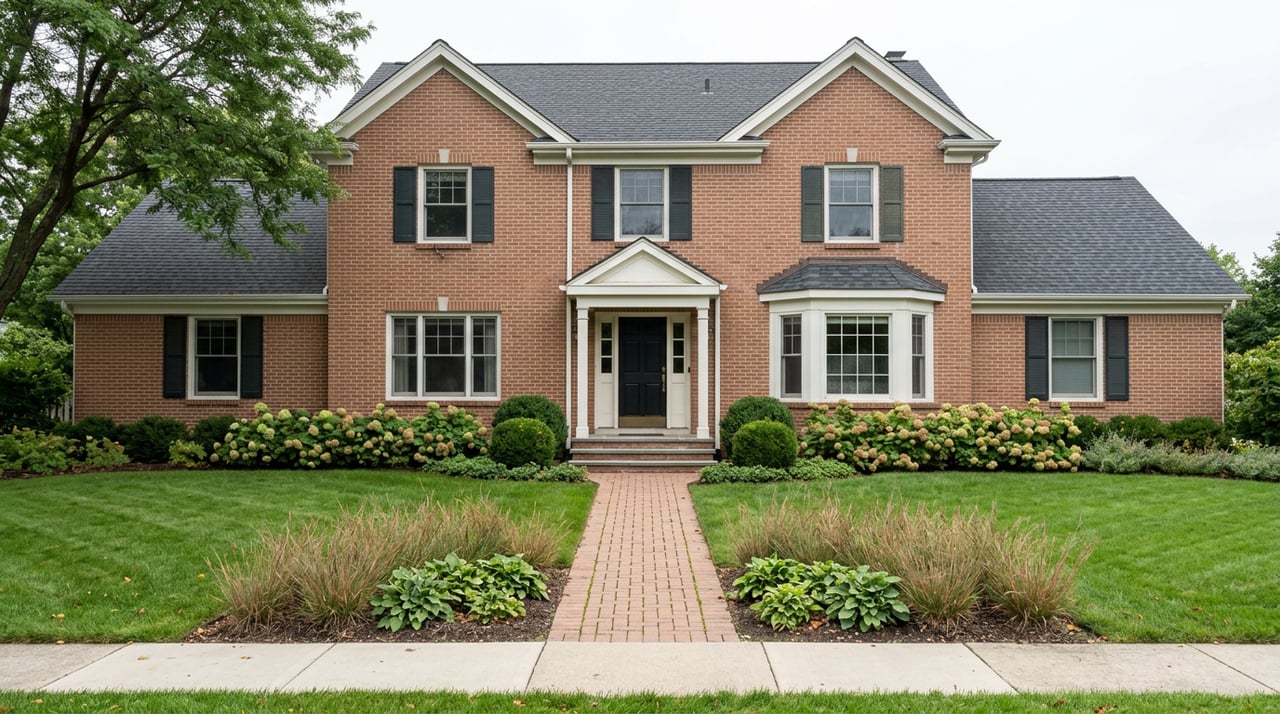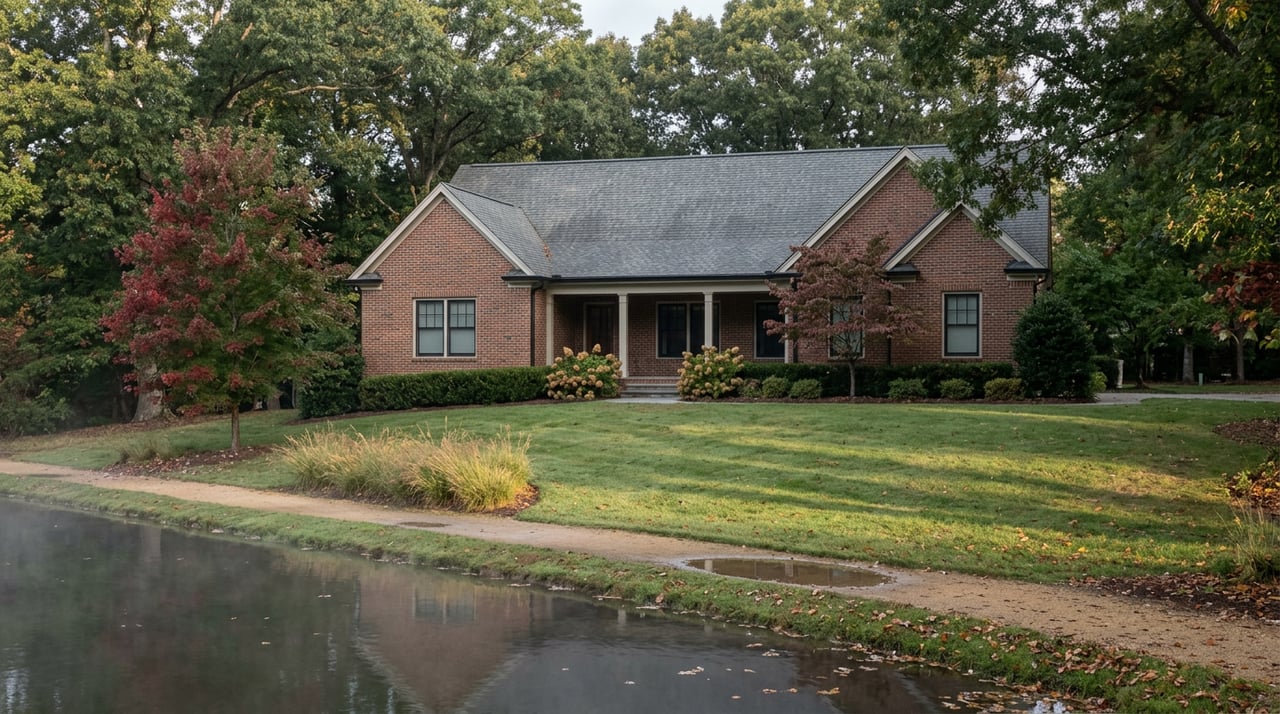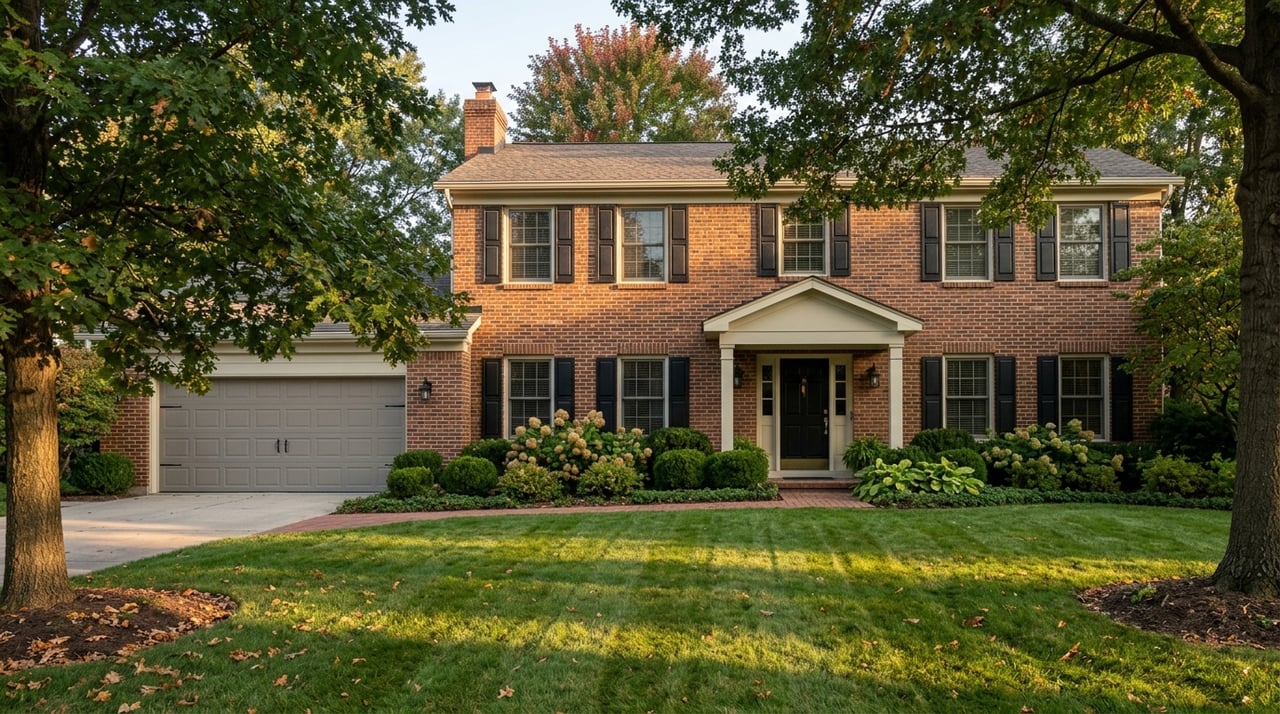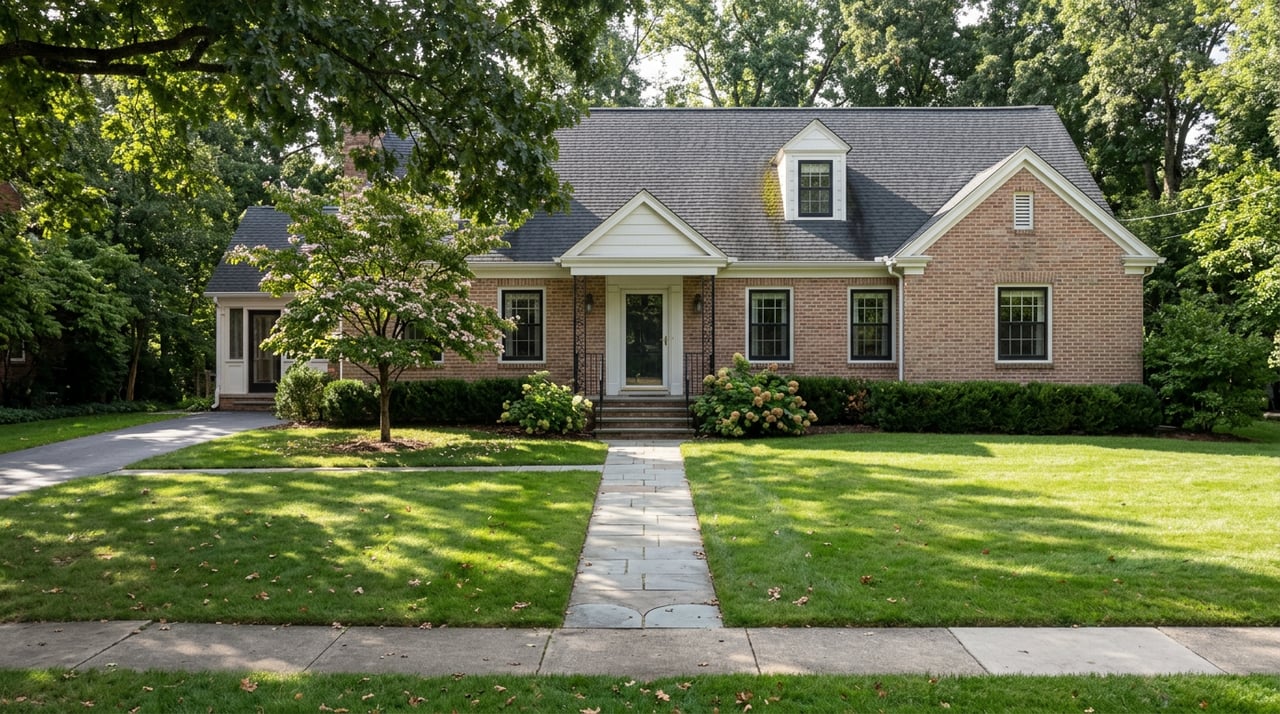
Last December, a four-bedroom single-family home in Arlington's North Highlands neighborhood sold for $1,615,000. Three months later, in March, the property next to it, a five-bedroom, three-and-a-half-bath duplex built under the county's Expanded Housing Options program, sold for $1,610,000. Same block. Same era of construction. One home, one government-approved multi-unit building, and a price gap of five thousand dollars.
If you are comparing homes in Arlington right now, that pair should bother you a little. A duplex is supposed to be worth more or less than a single-family house next door, not the same, because it represents a fundamentally different kind of asset: more rentable square footage, different maintenance math, different resale pool. The fact that the market priced them almost identically is not a coincidence. It is what happens when buyers and appraisers are pricing in uncertainty rather than pricing in units, because right now nobody in Arlington can say with total confidence which kind of building is legally guaranteed to exist on a given lot five years from now.
Three Years In, Still No Verdict on the Merits
The policy behind that uncertainty is Arlington's Expanded Housing Options ordinance, known locally as Missing Middle. It allows duplexes, triplexes, and buildings of up to six units to be built by right on lots that used to be zoned for a single house. The county board approved it unanimously and it took effect in the summer of 2023. What followed is a legal timeline that has outlasted most home sale transactions that started under it:
| Date | What happened |
|---|---|
| Sept. 2024 | Arlington Circuit Court Judge David Schell voided the EHO ordinance, ruling the county had not followed proper procedure. Roughly 45 permitted projects froze. |
| June 2025 | The Virginia Court of Appeals reversed that ruling on a procedural technicality, effectively putting EHO back on the books, but without ruling on whether the ordinance is actually valid. |
| April 8, 2026 | The Virginia Supreme Court heard oral arguments on whether to take the case at all. |
| May 19, 2026 | The court agreed to review it, though still only on the procedural question, not the merits. |
| This fall (2026) | Oral arguments are scheduled, with plaintiffs' attorneys, the anti-EHO group Neighbors for Neighborhoods, filing a 51-page brief on July 29. |
Nobody involved expects a quick end. Neighbors for Neighborhoods has told reporters it anticipates the underlying merits, whether EHO is legally valid at all, could go to trial within three to six months of the Supreme Court's next move. Arlington County's own EHO page states plainly that it will keep processing permits under the 2023 ordinance until a court tells it otherwise. That is the state of play a buyer is walking into today: a policy that is currently the law, sitting one court decision away from not being the law, for the third time in three years.
A Permit Can Go From Voided to Approved Overnight
The clearest sign of how unsettled this still is came after the 2025 appellate ruling, when the county's own EHO dashboard showed 38 previously voided permits flip status back to approved, a direct result of that decision putting the ordinance back in force. Neighbors for Neighborhoods called it, in blunt terms on their own site, "self-inflicting zoning chaos." Whatever your read on the policy, the mechanical fact is hard to argue with: a permit's legal status in Arlington can change without a single brick being laid, based entirely on which court has jurisdiction that month.
As of April 2026, the county's dashboard listed 59 active EHO projects, nine of them approved just since the 2025 appellate decision, totaling 40 new units. Some of those, according to local reporting, have already pivoted back into single-family construction plans rather than ride out the uncertainty. That detail matters for anyone comping a neighborhood: the permit status you see on a listing sheet or on the county dashboard today is a snapshot, not a guarantee, and some property owners are already hedging by abandoning multi-unit plans voluntarily.
Why the Developer Who Fought Hardest for EHO Just Walked Away
The clearest evidence of how real this risk is comes from the builder who did the most to keep EHO alive. An independent Arlington developer had already invested in two duplex projects when the 2024 circuit court ruling voided the ordinance. Facing what he later described as near-total financial ruin, he appealed, and it was his case that produced the 2025 procedural reversal now sitting before the Supreme Court.
This August, that same developer told a local reporter he is stepping back from the fight entirely. His attorney notified the court he would not file further briefs. He still supports EHO in principle, saying the zoning change is what makes it financially possible to redevelop an aging single-family lot into something other than a larger, more expensive single-family house. But after nearly losing his business over it, and after separately winning a vested-rights determination on two other townhouse projects on 25th Street South and North Quincy Street, both of which sold for roughly $1.2 million apiece, he decided the cost of continuing to litigate outweighed the upside. If the builder with the most at stake in EHO's survival is unwilling to keep fighting for it in court, that tells you something about how far from settled this actually is.
What This Means for the Comp You're Looking At
This is where the North Highlands sale pair stops being an oddity and starts being a pattern worth watching. Arlington's broader market has been resilient. Over the three months ending in July 2026, Arlington's median sale price was $835,000, up 7.7 percent from the same period a year earlier, with homes going under contract in a little over a month. Single-family detached homes are the strongest segment of that market this year, while condos are still recovering from a rough 2025. But that county-wide number flattens exactly the distinction that matters most right now: a home's value increasingly depends on whether its lot carries development rights that are actually guaranteed to survive, not just rights that exist on paper today.
In neighborhoods like Arlington Forest and Lyon Park, agents are already reporting more teardown activity and larger renovations than the broader statistics show, the kind of on-the-ground signal that tends to show up locally before it appears in county data. That is exactly where this legal uncertainty bites hardest. A lot that looks like a straightforward teardown candidate, priced against a neighbor that already redeveloped into a duplex or triplex, is not automatically a clean comparison. The neighbor's project might hold a permit that survived the "voided to approved" flip. It might hold a vested-rights determination the way the Arlington developer's 25th Street South and North Quincy Street townhouse projects did. Or it might be sitting on a permit that a Supreme Court ruling this fall could send straight back to a trial court that already ruled against it once.
Questions Worth Asking Before You Write an Offer
None of this means Arlington real estate is riskier than it looks. It means the risk shows up in a different place than most buyers are trained to check. Before treating a nearby EHO project, or a lot's own redevelopment potential, as part of your pricing logic, it is worth confirming a few things directly rather than assuming from the listing sheet:
- Check the property's current status on Arlington County's EHO permitting dashboard rather than relying on what a listing description says, since status can change with a single court order.
- Ask whether a neighboring EHO project has already broken ground. Projects with vested rights, like the two townhouse developments on 25th Street South and North Quincy Street, are treated differently by the courts than permits that exist only on paper.
- If you are buying a lot with the intention of redeveloping it yourself, understand that the ordinance allowing that could be back in front of a trial court within months, not years.
- If a comp used in your appraisal or CMA is a multi-unit EHO project, ask your agent to flag its permit history specifically, not just its sale price and square footage.
None of this is legal advice, and a title company or real estate attorney should confirm anything property-specific before you rely on it. But a five-minute check of permit status is a small ask compared to finding out after closing that the building next door, or the one you were planning to build, is tied up in litigation that has already reversed itself twice.
Does this affect every home in Arlington, or just lots near an EHO project? It matters most for lots that are themselves candidates for redevelopment, or that sit next to an active or recently approved EHO project, since that is what shapes both the comp set and the neighborhood's near-term character.
Should I just wait until the Supreme Court rules? Not necessarily. Oral arguments are scheduled for this fall, but a full merits trial could still be months away even after that, and Arlington's underlying market has stayed competitive through every prior twist in this case. Waiting for full legal certainty could mean waiting through another appeal cycle. The better move is usually to price the uncertainty into your offer and your due diligence, not to sit out the market entirely.
If you are comparing lots, comps, or teardown candidates anywhere in Arlington and want someone who checks permit status before it becomes a surprise at closing, Jurgen Gonzalez and the Mannheim Group can walk through the specific parcel with you. Talk to Jürgen & Kristen for personal, no-pressure advice before you write your next offer.