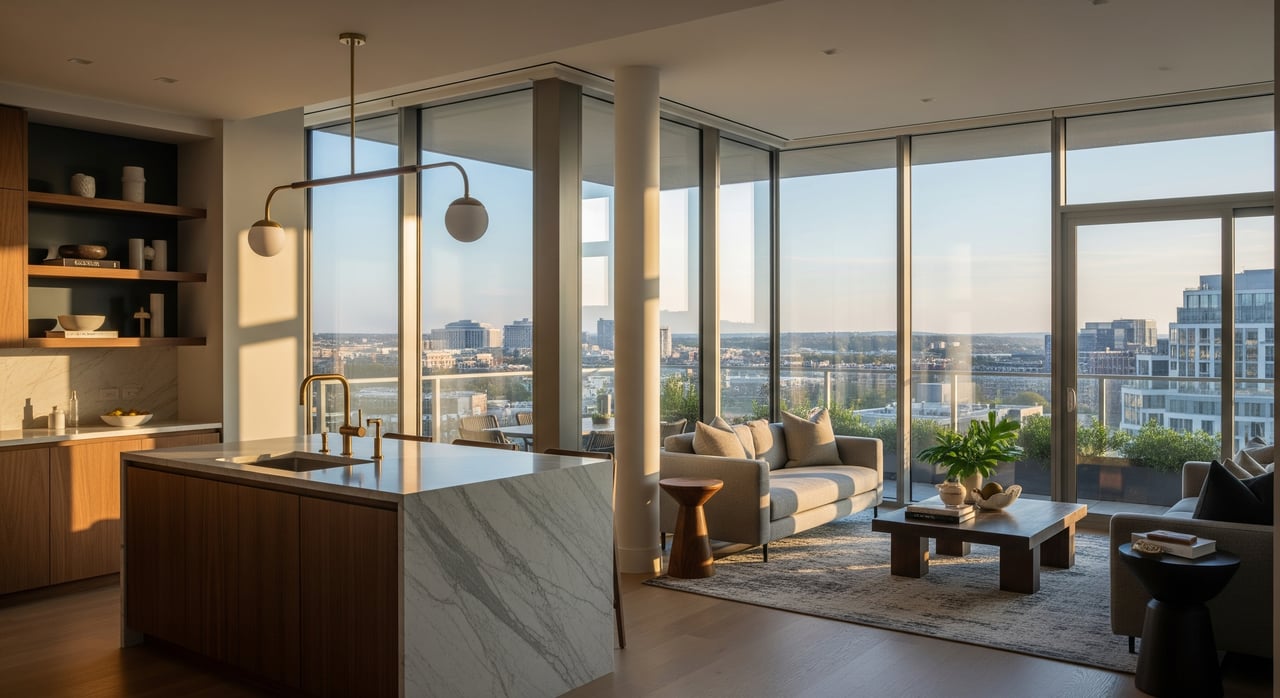
Thinking about a condo in Arlington and not sure where to start? You are not alone. With everything from sleek high-rises near Metro to quiet garden buildings tucked into residential streets, it can be hard to know which style fits your life and budget. This guide breaks down what “condo” really means, the main condo types in Arlington, where you tend to find them, and the key checks to make before you buy or sell. Let’s dive in.
What “condo” means in Virginia
A condominium is a form of ownership. You own your individual unit, and you share ownership of common areas through a homeowners association, often called an HOA. The HOA maintains shared systems and spaces, enforces rules, and collects monthly dues.
Condos are different from nearby alternatives. In a typical fee-simple townhouse, you often own the land and exterior and have fewer shared obligations. In a cooperative, which is less common in Arlington, you own shares in a corporation and live in the unit through a proprietary lease. Planned Unit Developments can look like condos, yet the ownership and association structure can differ.
For you, the practical takeaways are straightforward. Condo ownership means shared decision-making, rules that may affect pets, rentals, and renovations, and a need to understand the HOA’s financial health and any litigation. It also means you benefit from shared maintenance and amenities you might not want to manage alone.
Arlington condo types at a glance
Arlington offers a broad mix of buildings and settings. Each type has tradeoffs on space, fees, amenities, and location.
High-rise urban towers
These are multi-story elevator buildings with many units per floor and amenities such as concierge service, fitness centers, and rooftop spaces. You will most often find them around Rosslyn, Courthouse, Clarendon, Ballston, and Pentagon City or Crystal City in National Landing. They offer strong commuter convenience and quick access to shops and dining.
High-rises often come with higher HOA fees due to elevators, security systems, and more amenities. In return, you may get better on-site services and a lock-and-leave lifestyle.
Mid-rise and boutique buildings
Mid-rises are smaller elevator buildings, often four to ten stories, with fewer units and a more intimate feel. Boutique conversions fall in this group too. You can find these in Clarendon, Courthouse, Ballston, and portions of South Arlington.
These buildings can offer a balance of location and lifestyle. You might see some amenities, yet typically lower fees compared with larger towers, depending on what is included.
Garden and low-rise condos
Garden buildings are walk-ups with one to three stories and outdoor common areas. Many are older, sometimes updated, with a classic neighborhood look and feel. You will see these in Westover, Cherrydale, and parts of North and South Arlington.
Garden condos can have lower HOA fees, though that varies by property. Stairs and limited amenities are common, and soundproofing can differ by building age and construction.
Townhouse-style condos
These look and live like rowhouses, yet the community is legally a condominium. The HOA often governs walls, roofs, and shared elements. You can find these across the county, including along Columbia Pike and in newer infill projects.
Townhouse-style condos can offer private entrances, multi-level living, and more storage. Fees and responsibilities vary, so confirm what is covered before you commit.
Lofts and mixed-use units
Some buildings started as commercial or industrial spaces and were converted to residential lofts. Others sit above retail in mixed-use developments. You will see these near active corridors such as parts of Crystal City and Columbia Pike.
These homes can offer tall ceilings, flexible layouts, and a modern vibe. Keep an eye on noise from adjacent retail, hours of operation, and rules that apply to mixed-use properties.
New construction vs. older conversions
Newer projects often bring higher finishes, developer warranties, and extensive amenities. Early on, the developer may still control the association. Older or converted buildings can offer character and a lower price per square foot, yet systems and reserves vary.
Whether new or old, review HOA documents, budgets, reserve studies, and any history of assessments so you know the financial picture.
How to choose the right Arlington condo
Start with your daily life. Do you want a short walk to Metro, or do you prefer a calmer street with green space? Proximity to Blue, Orange, and Silver Line stations in Rosslyn, Courthouse, Clarendon, Ballston, and Pentagon City often drives demand and may affect prices.
Consider amenities and fees. A concierge, fitness center, or rooftop space can be worth it if you use them. If not, a boutique or garden building with fewer amenities may fit your budget better.
Think about layout and storage. High-rises can offer views and modern finishes. Townhouse-style condos give you multiple levels and separation of space. Lofts provide openness and light. In Arlington, confirm what storage is included and whether you have a deeded garage space or only assigned parking.
Review rules that affect your lifestyle. Pet policies, rental limits, and renovation approvals vary by building. Short-term rentals are subject to local rules and building rules, so confirm those if you plan to rent.
Financial and lending checkpoints
Condo due diligence is part numbers, part policies, and part building health. Focus on the big levers that can affect both livability and resale value.
HOA fees and inclusions
Monthly dues can include common-area maintenance, master insurance, water and sewer, trash, snow removal, reserve contributions, and amenities. Some buildings include certain utilities, such as heat or electricity. Ask exactly what is covered and how fees are billed.
Reserve funds and special assessments
Look at the most recent reserve study and the reserve funding plan. Healthy reserves help cover big-ticket items like elevators and roofs. If reserves are low, the risk of special assessments goes up. Ask about recent or planned assessments and the timing.
Insurance boundaries and HO-6 policies
Confirm what the master policy covers and where your responsibility begins. Many buildings are walls-in for the association, which means you insure interior finishes, personal property, and liability with an HO-6 policy. Note the master policy deductible and whether any portion could be passed to owners after a claim.
Lending and project approval
Some loan programs require condo project approval. FHA and VA loans, and certain conventional investors, maintain lists and criteria. Not every Arlington building is eligible. Owner-occupancy ratios, pending litigation, and weak reserves can affect financing. Talk to your lender early and verify building eligibility before you write an offer.
Due diligence checklist
A careful review protects you from surprises. Use this list to guide your process.
Key documents to request
- Declaration of Condominium and recorded plat
- Bylaws and rules or house regulations
- Current budget and recent financial statements
- Most recent reserve study and funding schedule
- HOA board meeting minutes for the last 12 to 24 months
- Certificate of insurance for the master policy, with limits and deductible
- Resale certificate or condo disclosure packet with fees and assessments
- List of past, current, and planned assessments or capital projects
- Rental policy and current rental or owner-occupancy statistics
- Management contract and contact information
- Litigation history and any pending claims
- Alteration and renovation approval rules
- Parking deed or assignment and storage allocation
Questions to ask
- What do monthly fees cover, and are increases expected?
- Are major projects planned, and what is the projected cost and timeline?
- When was the last reserve study, and is funding on track?
- Are there ongoing or recent insurance claims or litigation?
- Are there rental caps or waiting lists, and what is the investor ratio?
- How responsive is management, and what are dues collection rates?
- How are repairs handled between owners and the HOA?
- Are amenities under renovation or closure? Are any warranties transferable in newer buildings?
Red flags to watch
- Financials or minutes that are hard to obtain or incomplete
- Large or repeated special assessments
- Low reserves relative to upcoming needs
- Pending litigation, especially for structural issues or mismanagement
- High delinquency rates on dues
- Rules that conflict with your planned use
Professionals to involve
- A lender who understands condo project approvals and Arlington buildings
- A local real estate attorney familiar with Virginia condominium law if issues arise
- A home inspector with multi-unit experience and a condo-specific checklist
- A title company that can flag covenants and easements affecting ownership
Neighborhood snapshots and examples
Use these quick snapshots to visualize lifestyle and tradeoffs. Each building is different, so confirm details for the specific property you are considering.
Clarendon and Courthouse high-rises
You will find elevator buildings with amenities, café-lined streets, and strong access to Orange and Silver Line stations. Expect higher fees if the building includes concierge, gym, or a rooftop. Units can be efficient in size, and parking varies from deeded garage spaces to assigned spaces.
Rosslyn to Ballston corridor
This stretch is popular for commuters and offers a broad mix, from luxury towers to mid-rise options. Some buildings deliver striking views and high-end finishes. Others are more modest with lower fees. Construction type and age affect sound transfer, so ask about recent upgrades.
Westover and Cherrydale garden condos
Low-rise buildings with green courtyards and walk-up entries are common here. These can be appealing for price and simplicity. Storage and parking vary, and amenities tend to be limited, which may help with lower fees.
Columbia Pike townhouse-style and mixed-use
Townhouse-style condos and units above retail appear along the Pike and in nearby infill projects. You can find multi-level layouts and newer finishes. Confirm parking arrangements, guest policies, and any noise considerations from street-level retail.
Pentagon City and National Landing
Expect newer stock and mixed-use settings with shops and transit access. Buildings range from luxury high-rises to mid-rises. Check rental policies, EV charging capacity, and whether utilities are included in the monthly fee.
Practical next steps
If you are buying, get pre-approved with a condo-aware lender and verify project eligibility for your loan type. Request the resale packet early, and plan enough time in your contract to review financials and minutes from the last 12 to 24 months.
If you are selling, gather your documents in advance and be ready to explain HOA finances, recent assessments, and any upcoming projects. Clear, accurate disclosure builds buyer confidence and can reduce delays.
Parking rules in Arlington vary block by block, including on-street permit programs. Short-term rental policies also change over time, and buildings set their own rules. Always verify current county guidance and your association’s restrictions before you finalize plans.
Ready to compare buildings and narrow your search with a calm, process-driven plan? Connect with our veteran-founded team for local guidance that fits your timing and goals. For personal, no-pressure advice, talk to Jürgen Gonzalez today.
FAQs
What is a condo in Arlington and how does it differ from a co-op?
- A condo gives you deeded ownership of your unit plus shared common areas, while a co-op gives you shares in a corporation and a proprietary lease for your unit.
Where are high-rise condos typically found near Metro in Arlington?
- You will see many high-rise options in Rosslyn, Courthouse, Clarendon, Ballston, and Pentagon City or Crystal City in National Landing.
What do HOA fees often include for Arlington condos?
- Fees may cover common-area maintenance, master insurance, water or sewer, trash, snow removal, reserves, and amenities, with utility coverage varying by building.
How do special assessments work in an Arlington condo HOA?
- If reserves fall short for capital projects, the HOA can levy a special assessment, so review history, upcoming projects, and funding plans in the resale packet.
Can I use FHA or VA financing to buy an Arlington condo?
- Yes if the building meets program requirements, since project approval, reserves, litigation status, and owner-occupancy ratios can affect eligibility.
What should Arlington condo sellers prepare before listing?
- Assemble the resale packet, recent financials, reserve study, meeting minutes, and explanations of any assessments or projects to support a smooth sale.